
7 Communication Skills That Skyrocket Dating Success
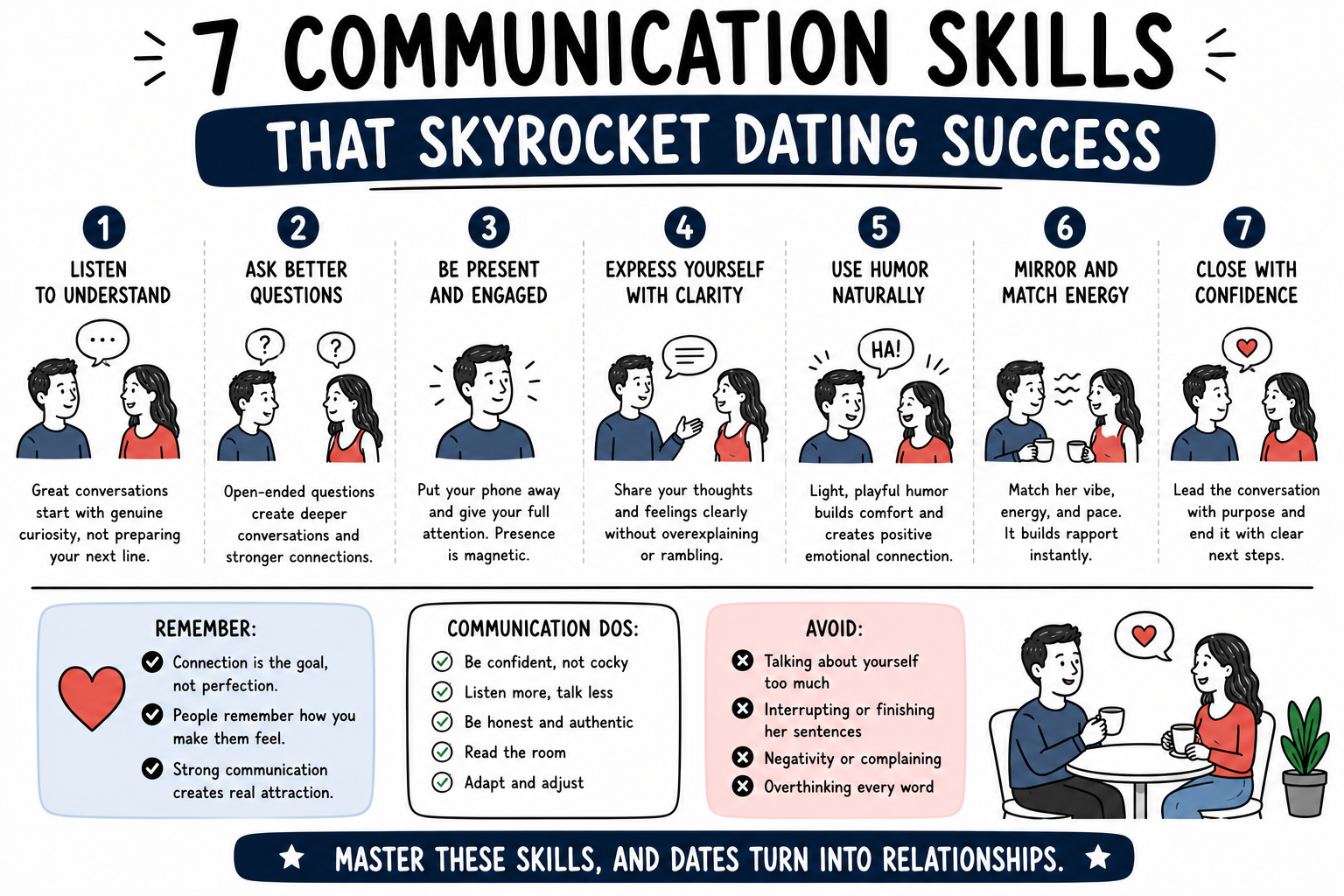
Strong attraction can fade fast when communication feels confusing. Mixed signals, distracted conversations, delayed replies, and avoided topics can turn a promising connection into guesswork.
Dating success doesn’t depend on saying the perfect thing. It depends on creating clarity, emotional safety, and mutual interest through steady communication. These seven skills can improve your messages, first dates, and developing relationships without making you sound scripted.
Build Immediate Connection With Active Listening
Listening well makes people feel interesting, valued, and safe. You don’t need to dominate a conversation to make a strong impression. Attention often creates more connection than clever stories or constant jokes.
Show genuine interest through active listening
Put your phone away, maintain comfortable eye contact, and notice the details in someone’s words. Respond to what they said instead of planning your next impressive reply. Remembering a favorite band, a work goal, or a family detail also shows that you paid attention.
Aim for a balanced exchange. Let the other person finish, respond to their point, then share something related from your own life. The National Library of Medicine’s overview of active listening recommends focusing on the speaker, avoiding assumptions, paraphrasing, and asking for clarification.
Reflect before you advise
A reflective response checks your understanding before you rush into advice. Try, “It sounds like you felt overlooked when that happened. Did I get that right?” You can also summarize with, “So the move was exciting, but leaving your friends was hard.”
This approach prevents needless misunderstandings. It also acknowledges emotion without claiming that every conclusion or action was correct. In an initial-interaction study by H. Weger Jr. and colleagues, active-listening responses produced greater conversational satisfaction and social attraction than simple acknowledgments.
Turn details into useful follow-up questions
Ask about the detail the person just shared instead of shifting the focus back to yourself. If they mention learning to cook, ask, “What’s the best thing you’ve made so far?” Later, revisit that detail: “Did you ever try that recipe you mentioned?”
Specific questions feel personal without becoming invasive. They also give you a better sense of values, interests, and daily life.
Communicate Clearly Without Creating Pressure
Clear communication reduces mind-reading. It helps both people understand attraction, availability, and dating goals without forcing an instant answer.
Replace vague hints with honest interest
Indirect signals can be easy to miss. Rather than hoping someone notices your hints, use calm, direct language: “I’ve enjoyed talking with you, and I’d like to take you on a date.” Another option is, “I’m interested in getting to know you, if you feel the same.”
Use statements instead of assumptions. Say, “I’m looking for a committed relationship,” rather than, “You seem like someone who wants something serious.” Clarity shows confidence while leaving room for the other person’s choice.
Ask open-ended questions
Questions beginning with “what,” “how,” and “why” often invite fuller answers than questions limited to yes or no. Ask, “What does a good weekend look like for you?” or “How do you like to spend your free time?”
Explore routines, goals, faith, family, interests, and relationship expectations over time. Share your own answer too, so the date feels like an exchange rather than an interview.
State expectations before confusion grows
Discuss texting habits, exclusivity, physical affection, plans, and dating goals before resentment builds. Try, “I don’t need constant texting, but I like checking in most days. What feels natural to you?” If your preferences differ, treat that difference as useful information.
The Pew Research Center’s study of online dating in the United States found that recent users gave long-term relationships and casual dating different levels of importance. People may want different outcomes, so asking early can prevent false expectations.
Create Emotional Safety With Empathy and Vulnerability
Chemistry grows when people can share more than facts. Emotional openness works best when it develops at a pace that respects trust, privacy, and mutual interest.
Validate feelings without automatic agreement
Validation means recognizing someone’s emotional experience. It doesn’t mean you approve of every choice or accept blame for their feelings.
Try, “I can see why that disappointed you,” or, “You seem excited about this opportunity.” When someone feels nervous before a date, say, “It makes sense that you’re nervous. Meeting someone new can feel strange.” Ask whether they want comfort, advice, or space before trying to solve the problem.
Share personal thoughts with measured vulnerability
Start with preferences and experiences. As trust grows, share values, fears, needs, and lessons from past relationships. You might say, “I’ve learned that I need direct communication because guessing creates stress for me.”
Watch the response. Respectful curiosity and reciprocal sharing suggest emotional safety. Mockery, pressure, sudden withdrawal, or using your disclosure against you are warning signs.
Stay curious about differences
Family, identity, religion, politics, culture, and past relationships can shape dating expectations. Ask before assuming: “What role does faith play in your life?” or, “Are there family traditions that matter to you?”
Cultural humility means accepting that your habits aren’t the default. Listen for context, avoid judging unfamiliar customs, and don’t demand that someone explain an entire group or identity.
Make Digital Communication Clear, Warm, and Respectful
Texting and dating apps remove facial expressions, vocal tone, and instant feedback. A short message can sound cold, while sarcasm can land as an insult.
Write messages that invite a real response
Skip generic openers when a profile gives you something useful. Mention a shared interest, respond to a photo or prompt, and ask one focused question: “You listed hiking and jazz. Which trail or concert has been your favorite?”
Avoid one-word replies, long strings of interview questions, and messages that demand immediate attention. A warm message gives the other person room to answer when they’re free.
Reduce tone problems in text
Sarcasm, abbreviations, punctuation, and delayed replies can carry meanings you didn’t intend. Add context when needed: “I’m teasing, not criticizing.” A light emoji may help in casual conversation, but don’t use it to soften a serious boundary or apology.
Move sensitive topics to a call or face-to-face talk when text creates confusion. Digital messages should support real communication and consistent actions.
Set fair expectations for response time
A fast reply doesn’t prove attraction, and a slow reply doesn’t prove rejection. People work, sleep, travel, care for family, and manage different phone habits.
Communicate your schedule: “My workdays are packed, so I may reply at night.” If someone hasn’t answered, follow up once without pressure. Repeated cancellations, vague replies, or long stretches of attention followed by silence reveal a pattern worth considering.
Handle Boundaries and Conflict Without Damaging Attraction
Disagreement can show whether two people handle differences with care. A healthy connection makes room for repair, honest limits, and respectful conflict.
Express boundaries directly and calmly
State the limit, explain what feels comfortable, and say what you’ll do if it isn’t respected. For example: “I don’t want physical intimacy tonight. I’m comfortable holding hands, and I’ll leave if you keep pressuring me.”
This structure works for time, privacy, alcohol, money, exclusivity, and personal space. A boundary is about your choices, not controlling another person.
Address problems without blame
Describe the behavior, explain its impact, name the need, and make a clear request. Say, “When plans change without notice, I feel dismissed. I need more warning. Can you text me as soon as you know?”
Avoid “you always,” character attacks, sarcasm, and keeping score. The Gottman Institute’s guide to criticism, contempt, defensiveness, and stonewalling separates complaints about behavior from attacks on character.
Repair mistakes and spot unsafe patterns
A real apology names the action, recognizes its impact, and changes the plan: “I interrupted you and made you feel ignored. I’m sorry. I’ll let you finish before I respond.” Intent matters, but impact still deserves attention.
Ordinary misunderstandings can be repaired. Repeated contempt, manipulation, coercion, intimidation, dismissal, or boundary violations point to an unsafe pattern. Attraction should never require you to tolerate fear or disrespect.
Turn 7 Communication Skills That Skyrocket Dating Success Into Habits
Good dating communication comes from repeated behavior, not memorized lines. Apply the skills before, during, and after each date.
Before meeting, clarify your intentions, choose a setting that allows conversation, and prepare a few open-ended questions. During the date, listen, show empathy, express interest, and respect physical and personal limits. Afterward, send an honest follow-up: “I enjoyed meeting you and would like to see you again,” or, “I didn’t feel the connection I’m looking for, but I wish you well.”
Measure compatibility through communication patterns
Look for reciprocity, respect, consistency, emotional safety, and shared expectations. Chemistry can be strong while communication remains confusing or dismissive. Repeated avoidance and disrespect deserve more weight than a memorable first date.
Use observable behaviors for your self-check
Ask yourself:
- Did I listen without interrupting?
- Did I express my intentions clearly?
- Did I ask questions and share at a fair pace?
- Did I respect boundaries?
- Did I repair misunderstandings?
Judge progress by what you did and changed, not by harsh self-criticism.
Turn Better Communication Into Better Dating Outcomes
The seven skills are active listening, clear expression, open-ended questions, empathy, measured vulnerability, digital clarity, and respectful boundary-and-conflict communication. Together, they create clearer conversations, stronger trust, and greater emotional safety.
They won’t guarantee attraction or remove rejection. They will help you find connections where interest is mutual and care is visible. Use one skill in your next message, practice another on your next date, and let honesty, attention, reciprocity, and follow-through guide what happens next.