
How to Build Confidence With Women in Your 40s
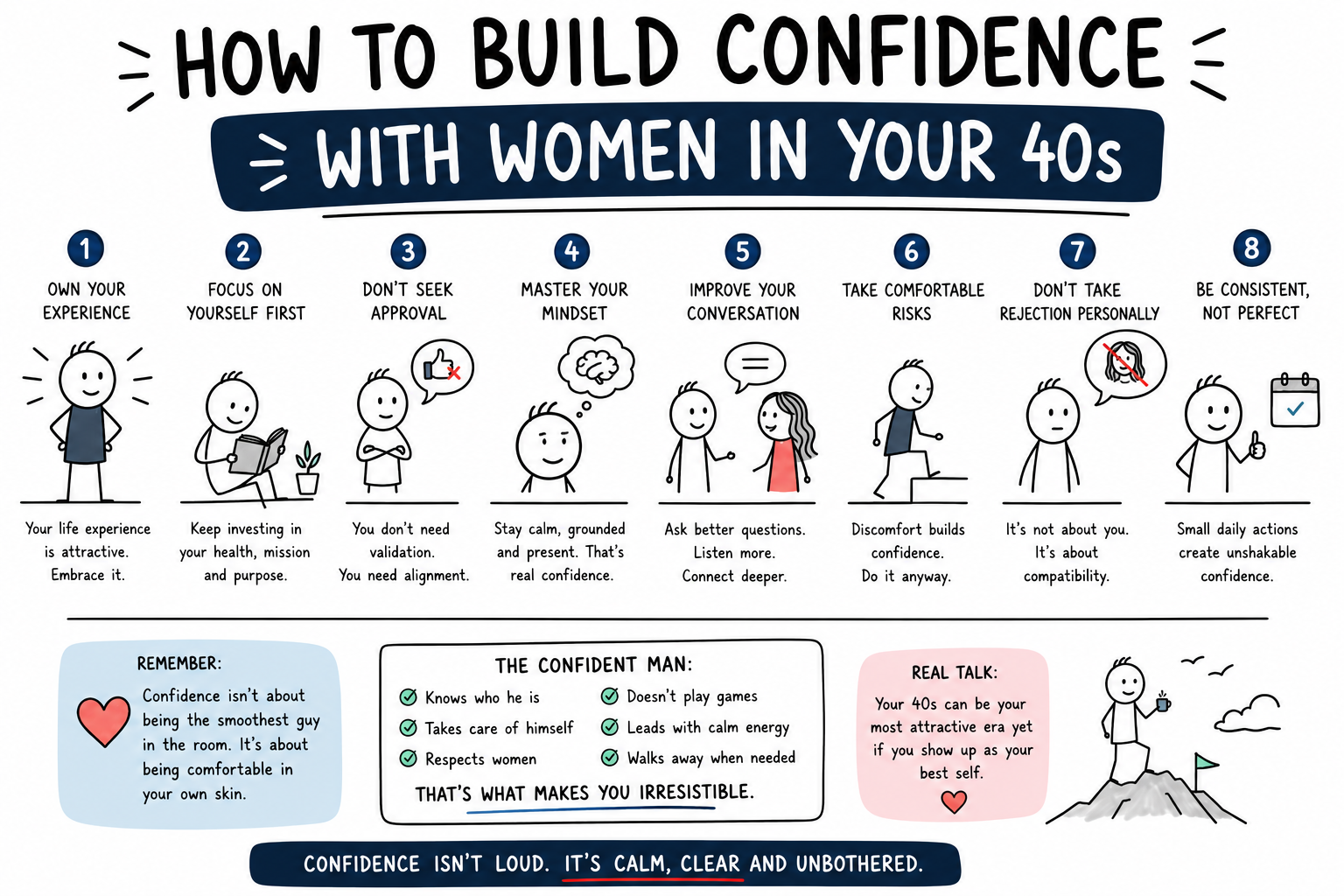
You've been out of the dating game for a while — maybe a long while — and somewhere along the way, you picked up a habit that's quietly killing your chances before you even open your mouth. You're probably doing it right now without realising it. We're talking about the subtle, everyday behaviours that women notice immediately, the ones that signal low confidence louder than anything you could actually say. If you've been wondering why conversations fizzle out or why you keep getting friendzoned despite doing "everything right," dealbreaker habits might be the real culprit.
In this article, you'll learn exactly which confidence-killing habits are working against you, why they matter more than you think, and — most importantly — how to replace them with behaviours that actually attract women. This isn't about becoming someone you're not. It's about getting out of your own way.
Why Small Habits Send Massive Signals
Here's the thing about attraction — it rarely comes down to one dramatic moment. It's built (or broken) through dozens of tiny signals you send constantly. The way you hold eye contact. How you respond when someone disagrees with you. Whether you apologise for taking up space in a conversation.
Women, especially those in their thirties and forties, are remarkably good at reading these signals. They've had enough experience to know the difference between a man who's genuinely confident and one who's performing confidence badly.
The tricky part? Most of these dealbreaker habits feel completely normal to you because you've been doing them for years. That's exactly what makes them dangerous.
The Over-Apologising Trap
If you catch yourself saying "sorry" before sharing an opinion, apologising for texting, or walking back a perfectly reasonable statement the moment someone pushes back — this one's for you.
Over-apologising signals that you don't trust your own judgement. And if you don't trust yourself, why would she?
This doesn't mean you stop being respectful or accountable when you've genuinely made a mistake. It means you stop treating your own presence like an inconvenience. Try this: next time you're about to say "sorry, this is probably a dumb idea," just... say the idea. Watch what changes.
Constantly Seeking Validation (Even Subtly)
This one's sneaky because it doesn't always look like insecurity on the surface. It shows up as:
- Ending statements with "...right?" or "does that make sense?" more than necessary
- Checking your phone too often during a date, clearly hoping for her approval
- Bringing up your achievements early and often to establish your worth
- Changing your position in a conversation the moment you sense mild disagreement
None of these things seem catastrophic in isolation. But string them together across a two-hour dinner and the picture becomes clear — you're more focused on her approval than on actually connecting with her.
Genuine confidence doesn't require external confirmation to stay intact. That's the version of yourself worth building toward.
Texting Habits That Quietly Undermine Your Confidence
A lot of men in their late thirties and forties underestimate how much texting behaviour matters. You might think it's casual and low-stakes. She doesn't.
The Double-Text Spiral
Sending a follow-up text two minutes after your first one — "or we could do Saturday?" — before she's even had a chance to respond reads as anxious. It tells her you're already worried the interaction is falling apart.
Over-Explaining Yourself
A text that should be three words becomes a paragraph because you're pre-emptively defending a suggestion you haven't even made yet. She asked if you wanted to grab coffee. You don't need to write an essay explaining your schedule, your preferences, and two alternative options.
Keep it direct. Keep it calm. It's a genuinely attractive quality that most men overlook entirely.
Shrinking in Social Situations
Picture this: you're at a party, things are going well, and someone cracks a joke at your expense. You laugh along, agree with the guy, and immediately minimise yourself. Meanwhile, she's watching the whole exchange.
Physical and social presence matters enormously. The way you occupy space — your posture, whether you hold your ground in a group conversation, how you respond to low-level teasing — tells a very complete story about how you see yourself.
This isn't about being aggressive or domineering. It's about not disappearing. Men who've worked through resources like The Attraction Vault's Dealbreaker Playbook often say this was the shift that changed everything — realising that simply not shrinking was more powerful than any line they could memorise.
Putting Her on a Pedestal Before She's Earned It
You matched with someone interesting. You've exchanged maybe fourteen messages. And somehow, in your head, she's already perfect and you're already terrified of losing her.
This is one of the most common dealbreaker habits men in this age group fall into, and it creates a dynamic that's almost impossible to recover from. When you treat someone like they're irreplaceable before you even know them, you hand over all your leverage — and all your calm.
She's a person. An interesting one, possibly. But a person. Stay curious. Stay grounded. Let things develop at a real pace rather than one powered by anxiety.
Conclusion
Breaking these habits isn't about performing some new version of yourself — it's about stripping away the anxiety-driven behaviours that are covering up who you actually are. The confident, grounded version of you that women respond to isn't a persona you build from scratch. It's what's left when you stop letting these patterns run the show. Start with one habit this week. Notice where it shows up, and choose a different response. Small, consistent shifts beat dramatic overnight transformations every time. If you're ready to go deeper on exactly what's holding you back and how to fix it, The Dealbreaker Playbook lays it all out in plain language built specifically for men navigating dating in their late thirties and forties.