
Dating as a Single Dad: Build a Healthy Relationship Without Losing Yourself
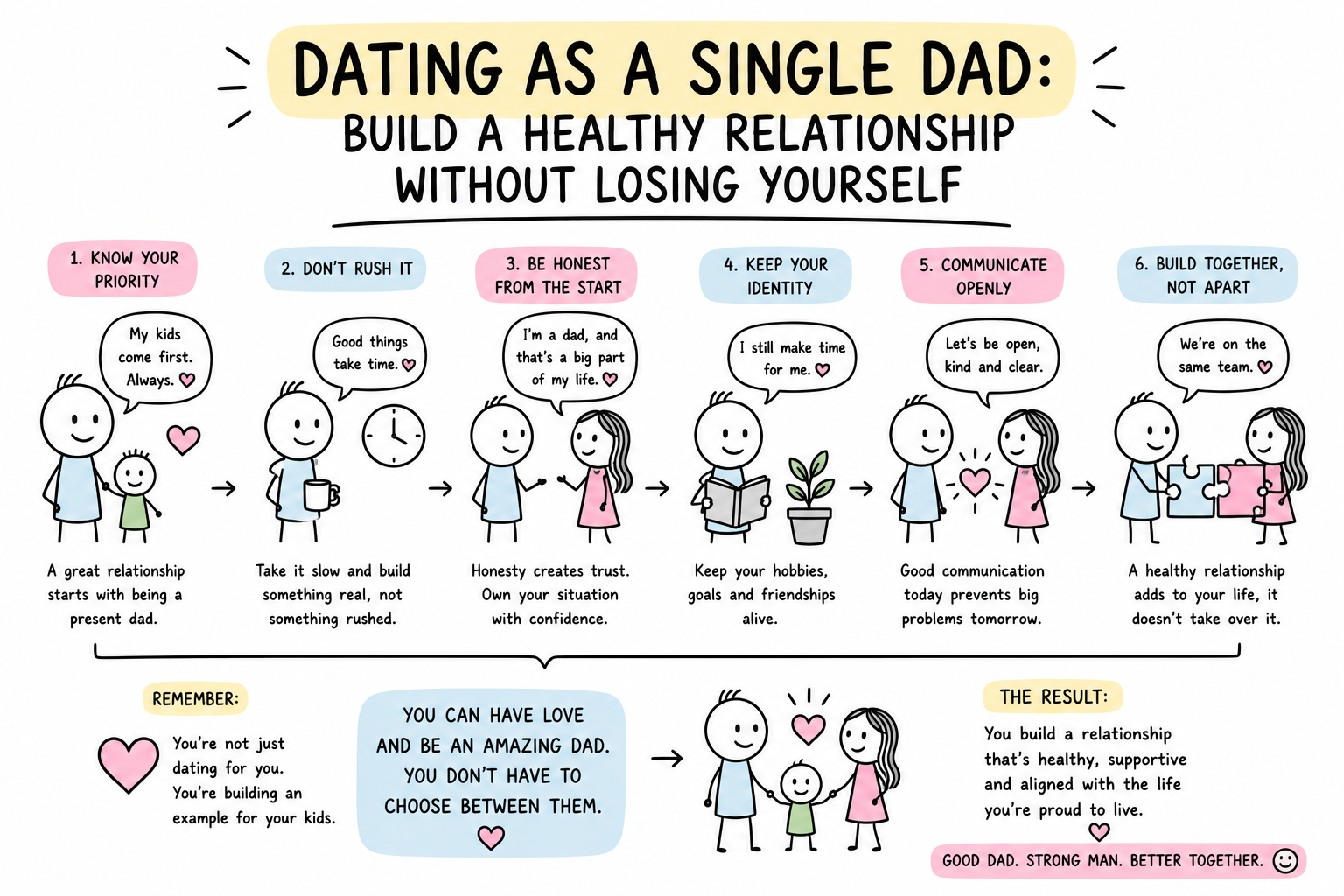
Dating as a single dad can bring excitement and guilt in the same week. You may want companionship while protecting your children’s routine, privacy, and sense of security. Dating as a single father is not about choosing between love and fatherhood; it is about clear boundaries, honest communication, and a pace that fits real family life.
Dating as a Single Dad Starts With a Life That Fits
A healthy dating life works around your responsibilities instead of competing with them. Your children, career, health, friendships, and need for adult connection all deserve space.
Define what you want before you start dating
Decide whether you want casual dates, companionship, a committed relationship, or remarriage. Then consider your values, faith, lifestyle, parenting goals, and views on family life.
Ask yourself: “How much time can I offer each week?” and “What qualities matter most in a partner?” Clear answers help you avoid choosing someone based only on loneliness, convenience, or strong chemistry.
Make time without neglecting parenting
Use your custody calendar, work demands, school events, and activities to plan dates. Predictable plans often work better than last-minute invitations, especially when you share parenting duties.
Trusted childcare, family help, or a clear co-parenting schedule can create room for dating. You do not need to see someone every day. Consistent communication and reliable plans matter more than constant access.
Protect your identity beyond fatherhood
Keep time for exercise, friends, hobbies, rest, and interests that belong to you. Confidence grows when dating adds connection to your life instead of becoming your only source of approval.
You also do not need to perform as a perfect father. Be honest about ordinary challenges, such as canceled plans when a child gets sick. A mature partner will respect responsible parenting.
Find Partners Who Respect Single-Father Life
Compatibility involves more than attraction. The right person respects your time, understands that children come first, and can discuss difficult subjects without creating drama.
Choose dating platforms and settings with care
Online dating, introductions through friends, community groups, professional circles, and hobby-based events can all work. Choose settings that match your comfort level and the kind of relationship you want.
Mention that you are a father and state your intentions clearly. Protect your children’s privacy by leaving out names, schools, home locations, daily routines, and identifiable photos.
Present fatherhood honestly without oversharing
You can say that you share custody or have set parenting days without explaining every legal, financial, medical, or co-parenting detail. Children should never become profile props or proof that you are appealing.
Share family information in stages as trust grows. Early dating should focus on learning about each other, not asking a new partner to absorb your entire history with an ex.
Look for maturity beyond chemistry
Discuss views on children, family life, availability, commitment, marriage, conflict, and future involvement with kids. Ask how the person handles disappointment and whether they respect limits.
Warning signs include jealousy of your children, pressure to meet them too soon, resentment about schedule changes, or repeated efforts to create conflict with your co-parent. A strong connection cannot fix poor character.
Communicate Clearly About Children and Boundaries
Honesty builds trust, but transparency does not mean giving a new partner access to every private part of family life. Share enough to set fair expectations while keeping adult problems away from your children.
Discuss your parenting schedule early
Use neutral language: “I have my children Tuesday through Thursday, so Friday works better for dinner.” Your limited availability is not a lack of interest. It is part of being a responsible parent.
Avoid angry labels or long complaints about the other parent. If custody, safety, or legal issues are serious, speak with a qualified family-law professional rather than making your dating partner your case manager.
Set firm rules for your child’s privacy
Decide when a date may visit your home, whether relationship photos can appear online, and what family information may be shared. A new partner should not contact, transport, discipline, or privately message your children without clear agreement.
Do not discuss adult conflict around the kids. They should not act as messengers, confidants, or relationship judges. Listen to their feelings, but keep adult decisions with the adults.
Talk about your co-parent with control
Be truthful without making your date responsible for unresolved anger. Explain the basic parenting arrangement and any boundaries your partner needs to understand.
In high-conflict situations, keep communication direct, brief, and private. A partner may offer emotional support, but legal disputes and serious mental health concerns require proper professional help.
Pace the Relationship Before Introducing Your Children
Children often need stability and time to adjust to a parent dating again. Child Mind Institute guidance on blended families stresses consistency, empathy, and patience, while a therapist’s guidance from Kids In The Middle suggests waiting 9 to 12 months in some post-divorce situations. There is no universal deadline.
Decide when introductions are appropriate
Wait until the relationship has moved beyond early dating and both adults have discussed their intentions. Your partner should show reliability, respect for boundaries, and patience with your parenting schedule.
Ask whether the meeting supports your child’s needs or only reduces pressure from your partner. You should also be able to describe the relationship calmly and in age-appropriate words.
Plan a brief, low-pressure first meeting
Choose a neutral, child-friendly place, such as a park, café, or casual activity. Keep the meeting short and avoid intense questions, grand promises, or language that suggests a replacement parent.
Let your child respond naturally. They may be quiet, polite, curious, or uncomfortable. Do not demand affection or immediate approval, and avoid introducing several dating partners in a short period.
Let trust grow over time
Continue one-on-one time with your children after the introduction. Your partner should not quickly take over discipline, driving, money, or daily care.
Watch for anxiety, withdrawal, jealousy, anger, or confusion. A calm check-in can help, but persistent distress may call for a licensed child therapist or family counselor.
Build a Relationship That Works for Everyone
A lasting relationship needs clear roles, private couple time, and respect for the parent-child bond. Good intentions are not enough when household duties and future plans remain unclear.
Set realistic expectations about roles
Dating a single dad does not automatically make someone a stepparent, co-parent, or household manager. Discuss childcare, chores, discipline, money, holidays, living arrangements, and long-term goals before combining homes.
Responsibilities should be agreed upon, not assumed. Your partner can become important to your children without replacing their other parent.
Make room for romance and family connection
Schedule private time for dates, calls, affection, and honest talks. Family outings can be enjoyable, but they should not replace adult-only connection.
Keep friendships, relatives, and community ties active. A healthy partner adds support to your life and does not isolate you from the people who knew you before the relationship.
Handle conflict away from the children
Discuss disagreements in private and avoid threats, insults, or breakup talks in front of the kids. Use clear statements such as, “I need plans confirmed earlier,” instead of blaming language.
Couples counseling can help with repeated conflict, commitment questions, or plans for a blended family. Children should never choose sides or carry messages between adults.
Avoid Common Dating Mistakes Single Dads Make
Small choices can affect trust quickly when parenting responsibilities are involved. Accuracy and patience protect both your dating life and your family.
Do not hide fatherhood or exaggerate availability
Pretending you have fewer responsibilities creates distrust and attracts poor matches. State your schedule honestly, including custody limits and the possibility of canceled plans when a child needs you.
Responsible parenting is a strength. The right partner will not expect you to apologize for showing up for your children.
Do not rush because dating feels difficult
Loneliness and limited free time can make an unsuitable relationship seem better than it is. Judge a partner by consistency, accountability, communication, and shared goals, not chemistry alone.
Take a pause if dating drains you, disrupts your children’s routine, or causes you to ignore your own needs. Children can share their feelings, but they should not hold veto power over every adult decision. Seek professional guidance when concerns involve abuse, coercion, safety, or severe distress.
Create a Sustainable Future for Dating and Fatherhood
Family life changes with custody, work, health, housing, school, and children’s ages. A relationship that lasts can adjust without erasing anyone’s important needs.
Measure relationship health by consistency
Watch whether actions match promises over time. Reliability during schedule changes, illness, stress, and conflict tells you more than grand romantic gestures.
Look for respect, emotional availability, accountability, and willingness to solve ordinary family problems. These qualities help love fit daily life.
Revisit expectations as circumstances change
Set regular times to discuss schedules, boundaries, intimacy, household roles, and future plans. Flexibility matters, but do not let your needs disappear whenever family demands increase.
Individual therapy may help with grief, divorce recovery, anxiety, or unresolved anger. Couples or family therapy can support communication and blended-family planning through appropriately licensed providers.
Conclusion: Dating as a Single Dad Can Include Love and Stability
Dating as a single dad works best when it is intentional, honest, and gradual. Define your relationship goals, protect your children’s privacy, communicate your schedule, and choose partners who respect family responsibilities.
Introduce someone new only after the relationship shows stability and trust. Preserve time with your children, protect private couple time, and keep adult conflict away from them. When dating as a single father, you do not have to give up love or responsible parenting. Choose a relationship that honors both.
